The Commodity Cycle: Why Every AI API You're Paying For Will Eventually Be Free
How Voice AI Just Went From $1.20 a Minute to Completely Free — And What You Can Do With It Today
Imagine buying a smartphone for thousands of dollars back in the early 2000s, only to see similar tech become affordable and built into every device a few years later. That’s exactly what’s happening with AI right now. Those fancy AI features you’re paying for—like voice assistants that sound human or apps that generate images on demand—are following a predictable path: starting as expensive, exclusive services, then becoming free and running right on your phone or laptop. We call this the “commodity cycle,” and it’s speeding up. Text AI took about three years to go free; images and voice did it in just 18 months. This means more power in your hands, without the subscription fees.
Why does this commoditization happen—and why is it inevitable for AI?
At its core, it’s simple economics: when something becomes widely available, easy to copy or recreate, and no longer feels “special,” competition explodes and prices crash toward zero.
Here’s why this plays out so reliably (and super-fast) in digital tech like AI:
- High fixed costs + near-zero marginal costs — Building the first great AI model costs millions in research, data, and compute. But once it exists, copying it or serving one more user costs almost nothing—no extra materials, no extra labor per use. (Unlike making cars or coffee, where each unit keeps costing money.)
- Rapid imitation and open sharing — Breakthroughs spread instantly via papers, code repos, global devs, and talent. Proprietary magic yesterday becomes free downloadable tomorrow.
- Competition shifts to “good enough” — As more players join, free options match most of the quality. Users stop paying premiums for tiny edges, so prices fall relentlessly until it’s basic infrastructure—like electricity or Wi-Fi.
In this revamped guide, we’ll break it down simply, using voice AI as our star example. You’ll see how this cycle works, what it means for your daily life (hello, free podcasts and smart home helpers!), and what’s coming next. Let’s dive in with some visuals to make it crystal clear.
The Three-Phase Cycle: From Locked-Up Luxury to Free-for-All
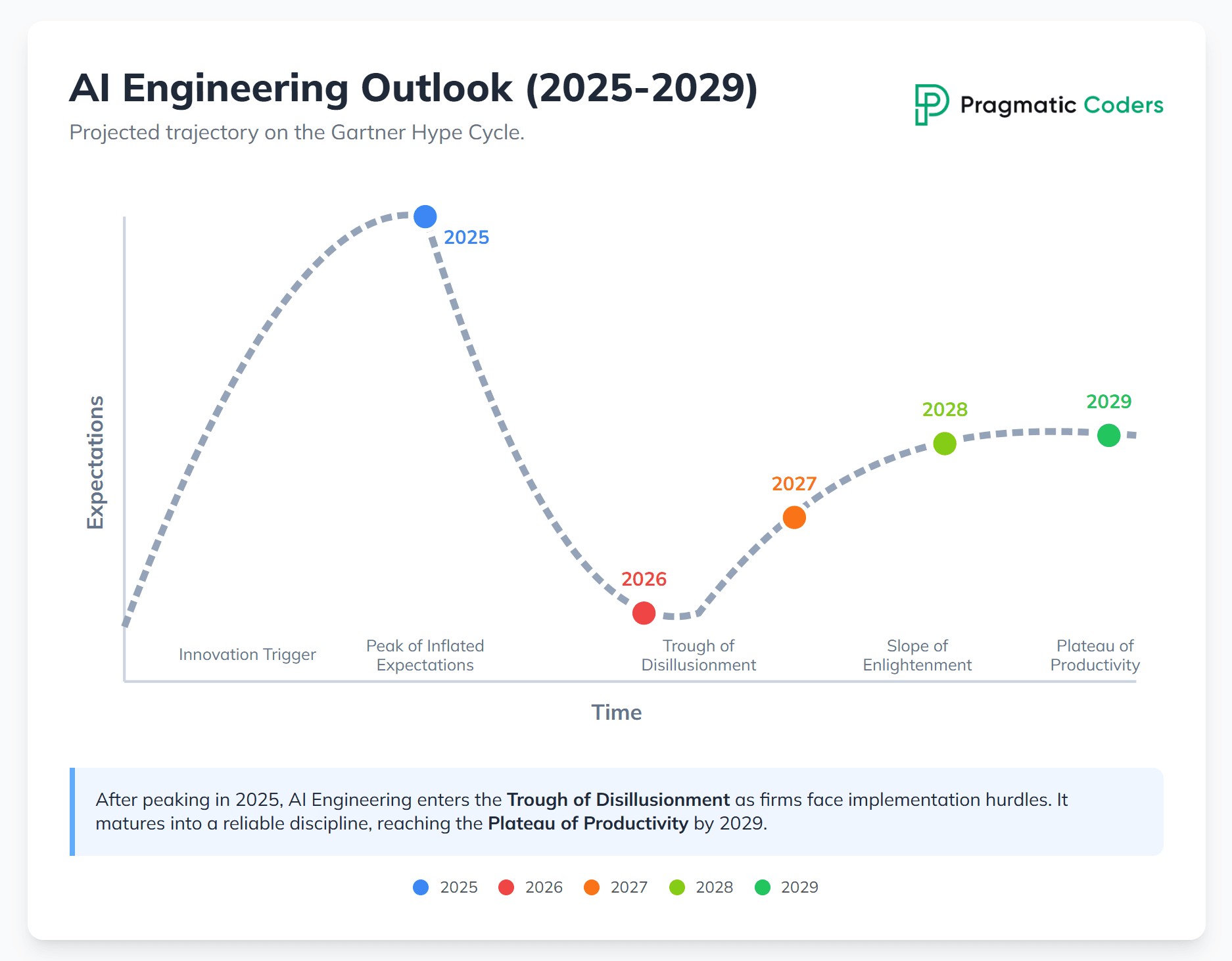
Every hot AI tech goes through three stages:
1. Proprietary Premium: Big companies launch it as a paid API (think: a fancy online service you subscribe to). It’s cutting-edge but costly and controlled.
2. Open-Source Catch-Up: Clever developers release free versions that match the quality. Anyone can download and tweak them.
3. Edge Commodity: It shrinks down to run on everyday devices like your phone or old computer—no internet needed, zero ongoing costs.
Take text AI: ChatGPT’s ancestor, GPT-3, debuted in 2020 at $0.06 per 1,000 words. By 2023, free open-source models like Llama matched it. Now, you chat with AI for free on apps everywhere.
Images followed suit: DALL-E in 2021 was premium; Stable Diffusion hit free in 2022. Today, generating art is as easy as snapping a photo.
Voice AI just finished the cycle in 2026. Services like ElevenLabs charged around $1.20 per minute for realistic speech. Then, open-source gems like Qwen3-TTS (January 22, 2026) and PersonaPlex-7B (January 17, 2026) dropped, offering multilingual voices, cloning from a short audio clip, and even real-time chat—all free and local (running these models locally does have a small “cost of ownership”).
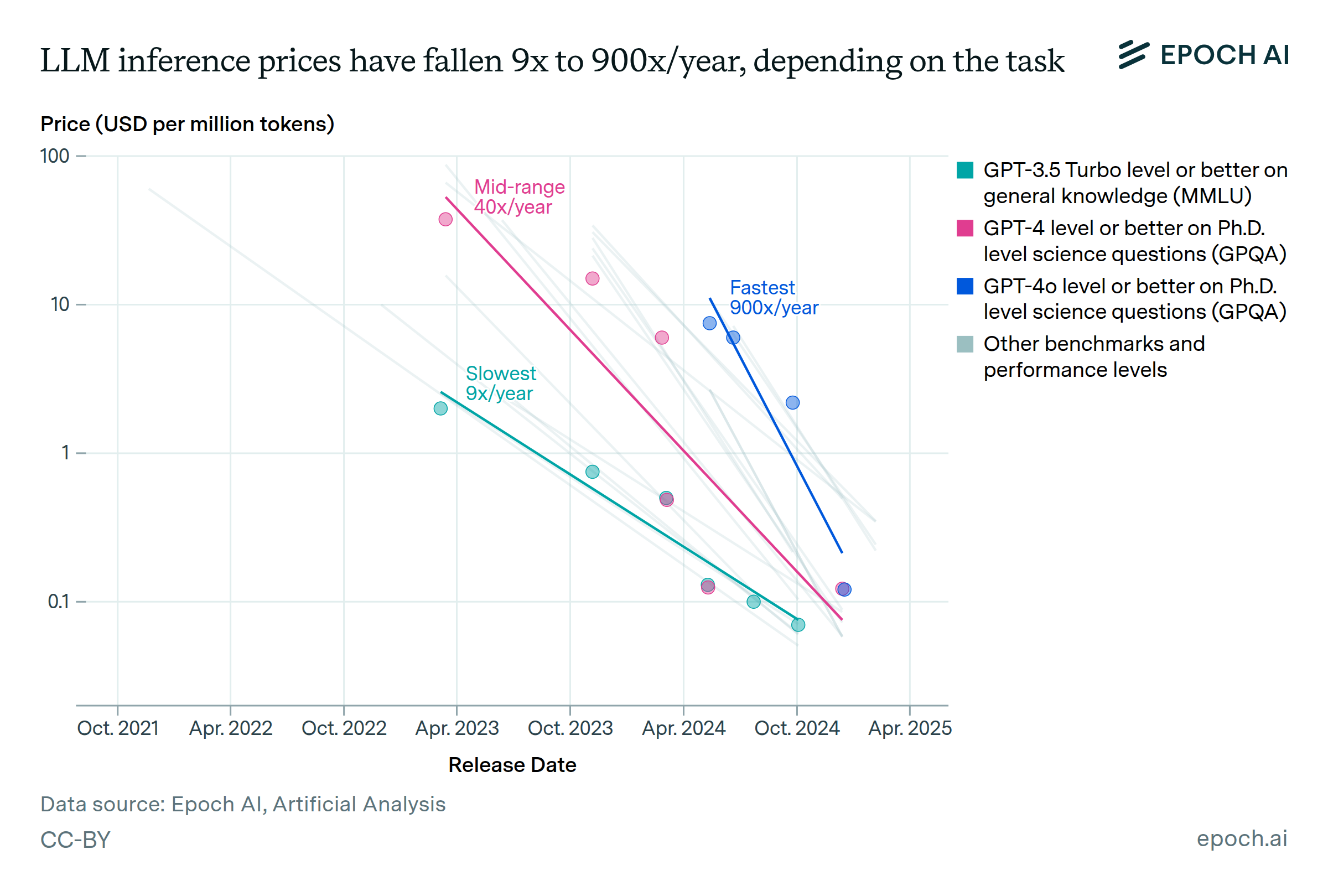
Here’s a graph showing how AI costs have plummeted over time, making premium features accessible to everyone.
Voice AI: Your Personal Sound Studio, Now Free on Any Device
Voice tech’s transformation is a game-changer for consumers. Remember paying for audiobooks or voiceovers? Now, with models like the tiny 0.6 billion parameter Qwen3-TTS variant, you can clone voices on your laptop’s basic processor—no fancy graphics card required. It fits in under 1GB of memory and works offline.
Picture this: Create custom podcasts with celebrity-sounding narrators, or have your smart fridge read recipes in your grandma’s voice. Latency? Down from seconds to milliseconds. Cost? From $1.20/minute to zilch. Plus, your data stays private—no sending clips to the cloud.
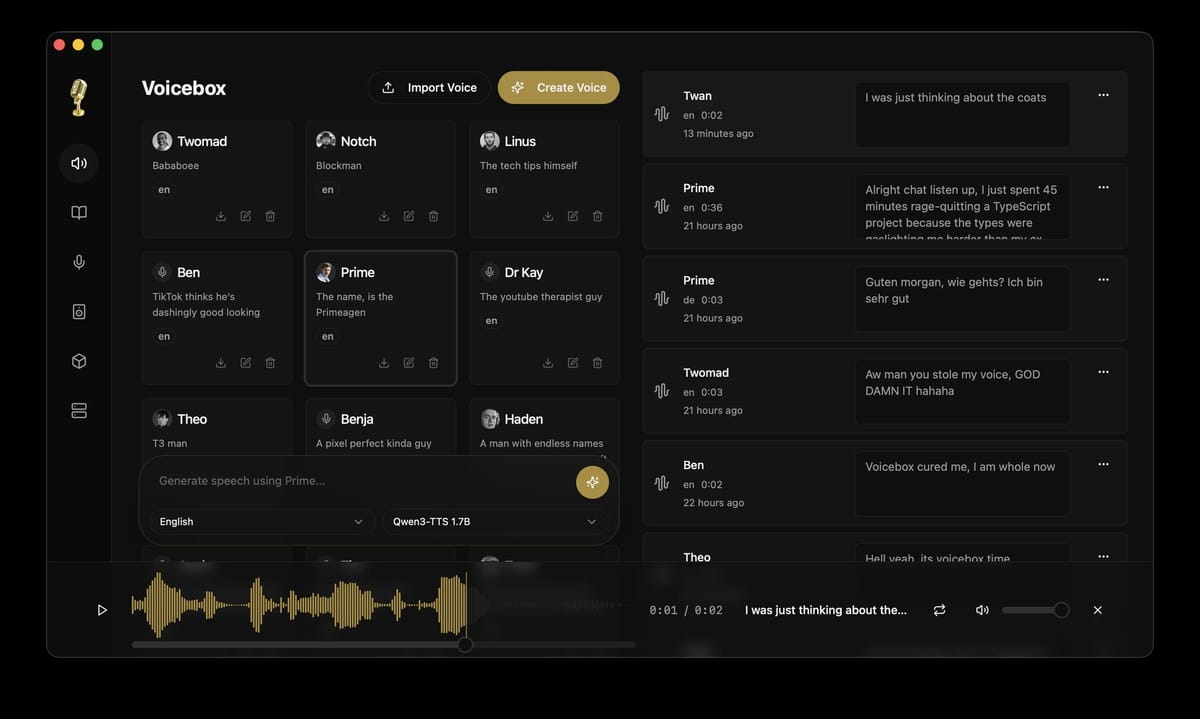
Check out what these tools look like in action. Screenshot of a popular voice cloning interface, showing how easy it is to get started.
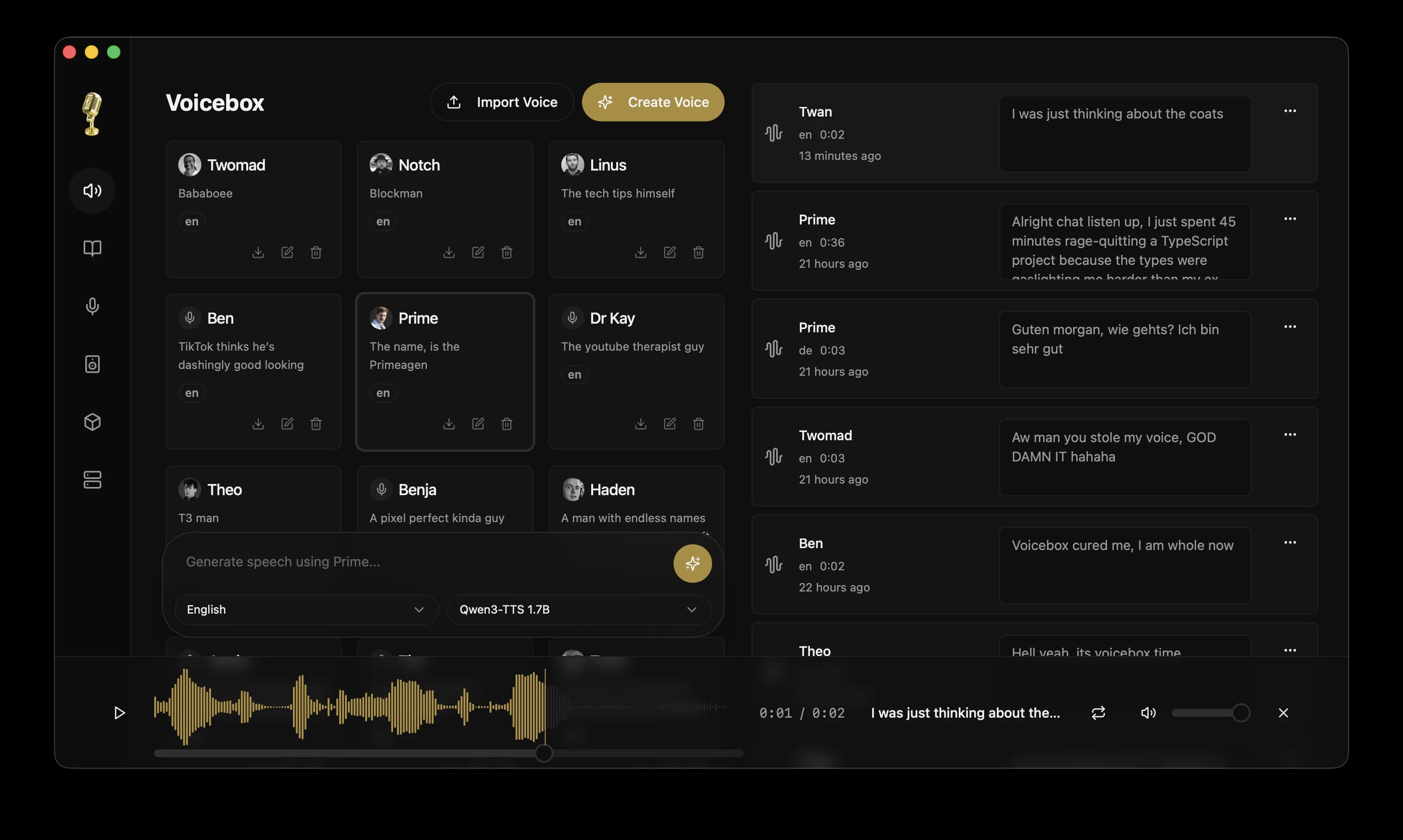
Apps like Voicebox, built by one developer on these free models, let you edit multi-voice projects, produce videos, and even integrate with your home setup. It’s lighter and faster than old paid tools, running on Macs or basic servers. For you, this means turning hobbies into pro-level creations without breaking the bank.
What This Means for You: Cheaper, Smarter, Safer Everyday AI
Forget the boardroom talk—this cycle puts power in *your* pocket. Here’s how it benefits consumers like you:
- Save Money: No more subscriptions for basic AI. Expect free voice assistants in apps, games, and devices. That always-on helper? Now it’s as standard as your phone’s calculator.
- Better Privacy and Speed: Edge AI runs on your device, so no data leaks or waiting for servers. Perfect for sensitive stuff like health apps or personal journals.
- More Innovation: Small creators can build cool tools. Imagine free AI tutors, custom music generators, or shopping bots tailored to you.
- Accessibility Boost: Low-cost hardware means AI for everyone, even in areas with spotty internet.
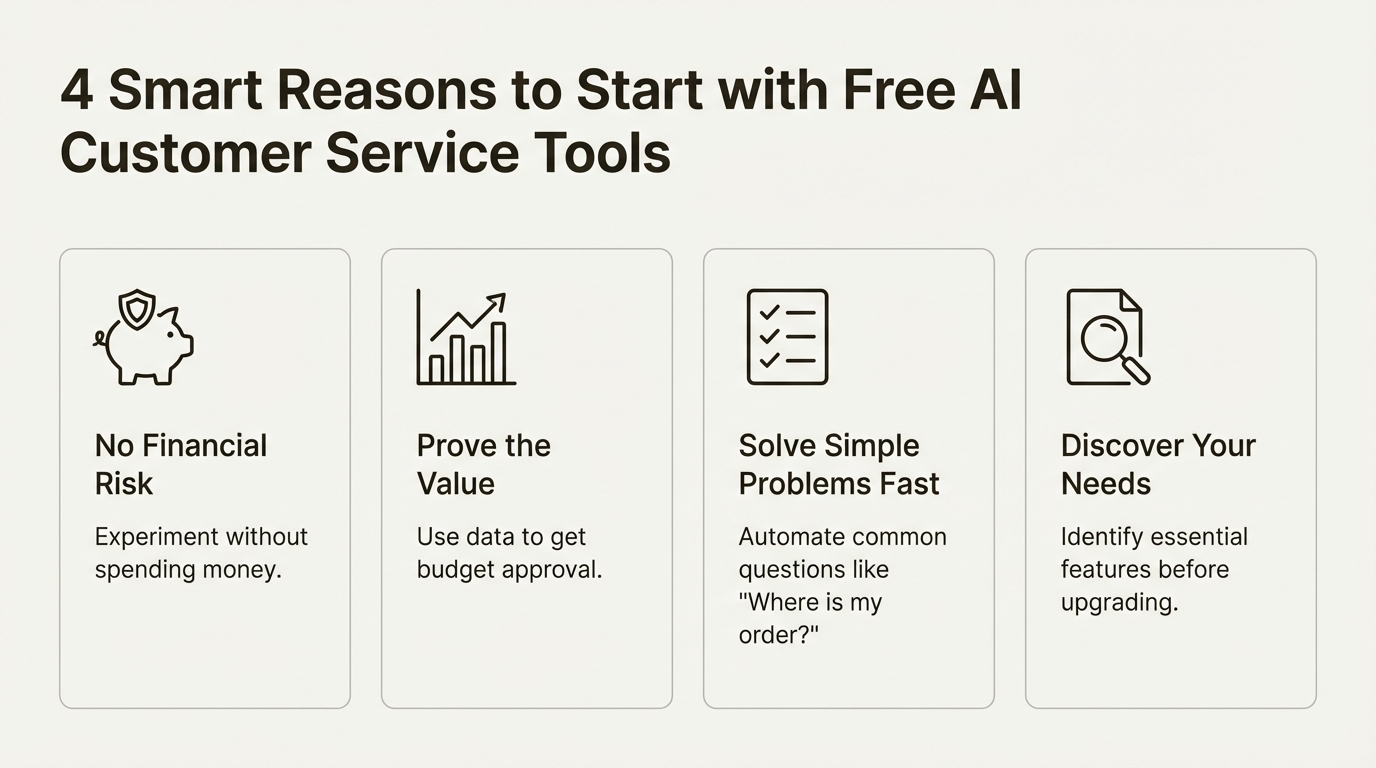
See this infographic on why free AI tools are a smart start for everyday users—it highlights the no-risk experimentation and quick wins.
For physical gadgets, edge models unlock smart homes without cloud dependency. Your thermostat could chat naturally, or a wearable could clone voices for reminders—all offline and free.
For Builders and Dreamers: Turn Free Tech into Your Next Big Thing
If you’re a hobbyist or side-hustler, this is your cue. The moat isn’t the AI itself anymore—it’s how you use it. Wrap free models in user-friendly apps, add your twist (like domain-specific voices for education or fitness), and ship. Voicebox shows one person can rival big companies in weeks.
What’s Next? Video and Beyond, Coming Free Soon
Based on the pattern, real-time video AI (like Sora) could go open-source by late 2026. Multimodal agents—AI that handles text, images, and voice together—might follow in 12-18 months. Specialized stuff like medical or finance AI? Even faster, thanks to tons of data.
But watch for trade-offs: Open-source might start buggier, so stick to trusted communities. Overall, it’s exciting—AI becoming like electricity: everywhere, essential, and essentially free.
Embrace the Free Future Today
The commodity cycle isn’t just tech talk; it’s your ticket to smarter living without the price tag. Check which AI you’re using—is it still premium? Look for free alternatives now. Download Qwen3-TTS or similar, experiment, and see the magic. The question isn’t if AI goes free—it’s what you’ll create with it. Ready to level up?